
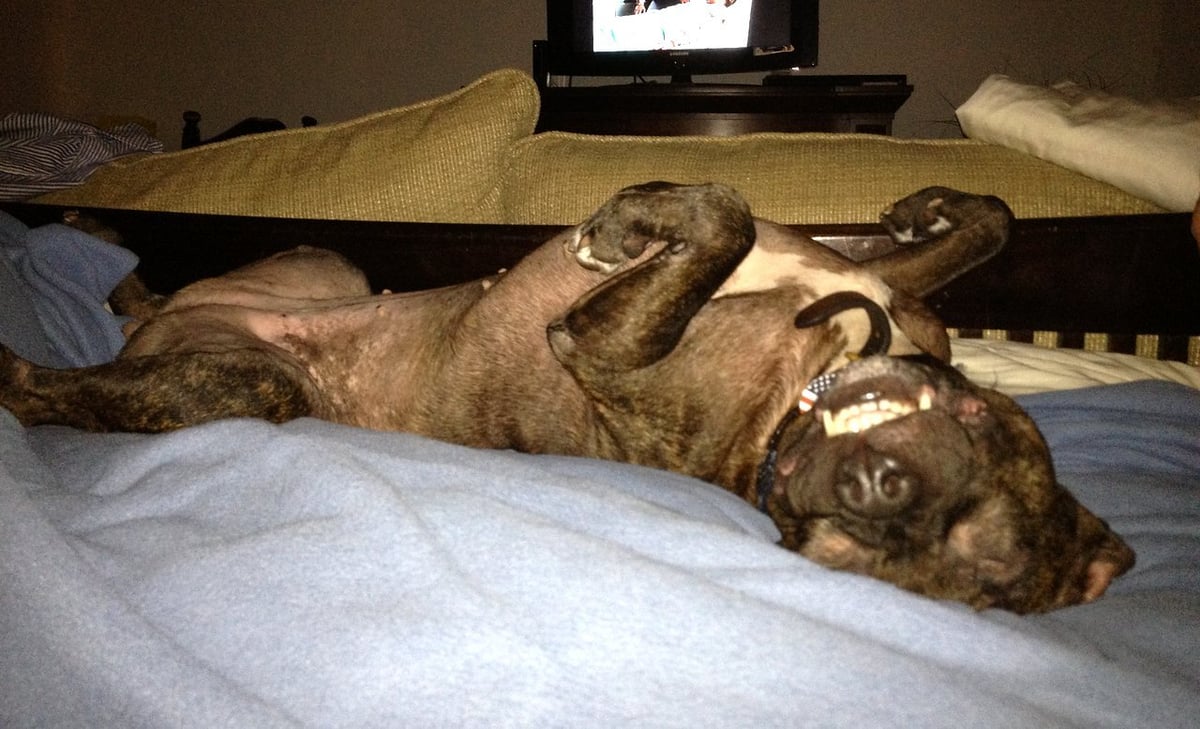
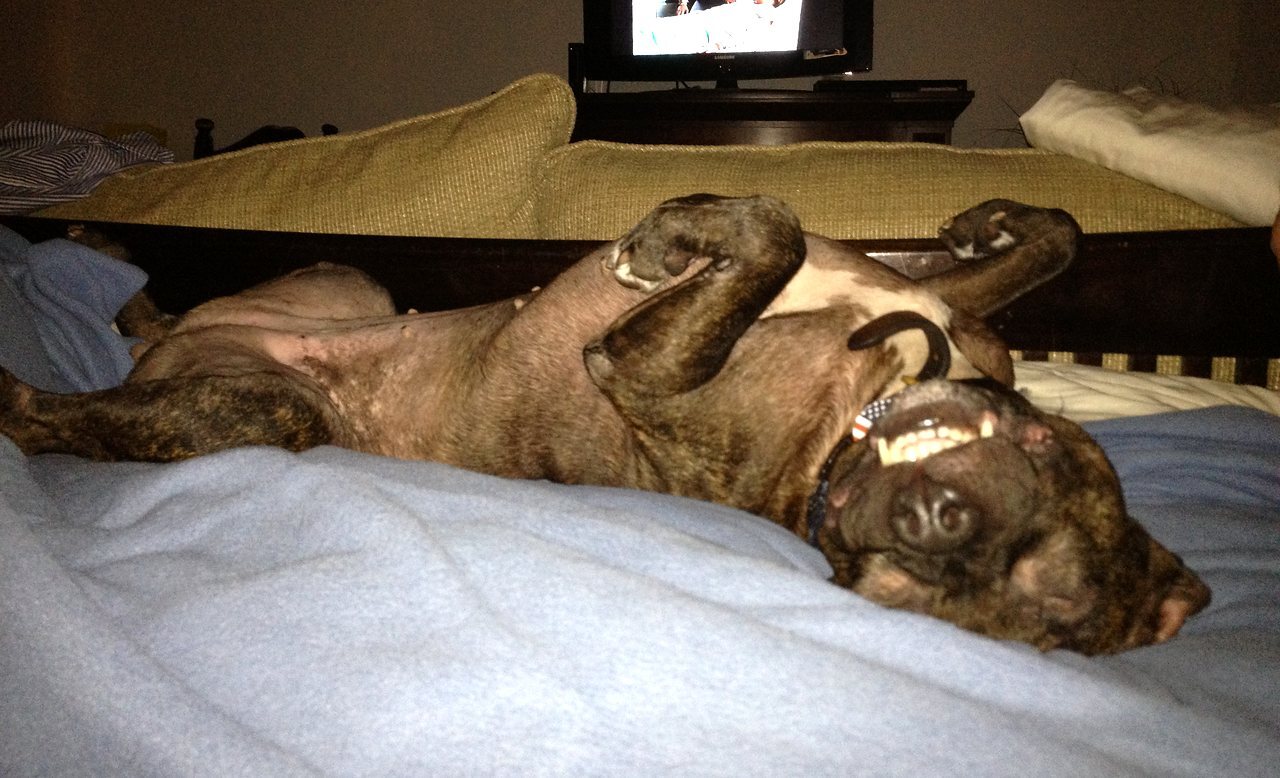
Before Brad and I started PetHSA, we shared our lives with an American Staffordshire Terrier named Mia. She was our first dog together and the first true love of my husband’s life. I arrived later. Fortunately, there was room for me, too.
By the time I met her, Mia had already spent years at Brad’s side. I was getting to know both of them, and it quickly became clear that loving one meant getting very involved with the other. That included a wardrobe I had not expected to find on a dog.
Mia wore old Ralph Lauren polos, ratty T-shirts and the occasional purchase from the children’s department. This was not a fashion statement. Her skin allergies could be so severe that, without something covering her, she could—and would—scratch herself until she bled, then keep scratching. Oftentimes she could do damage through the shirt, which quickly resulted in protective booties becoming part of the outfit too.
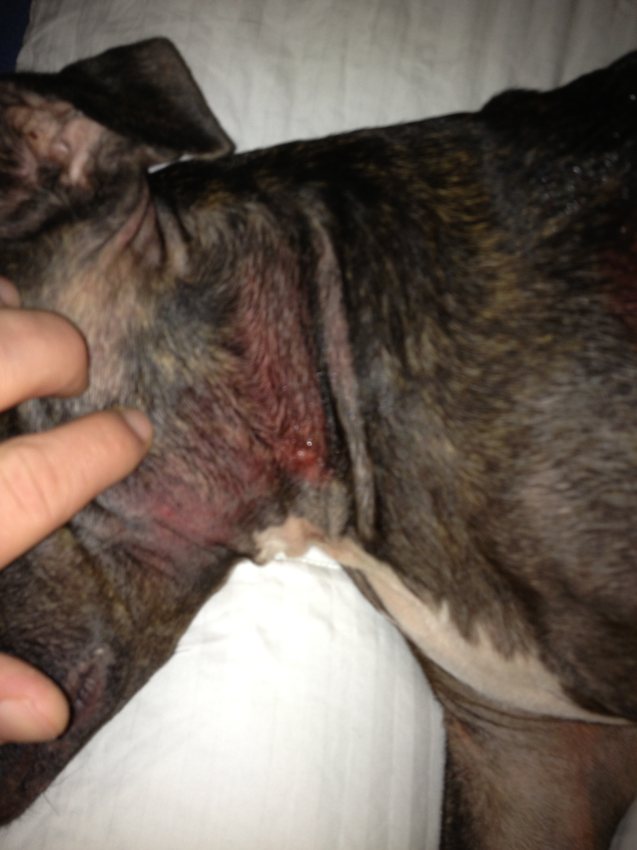
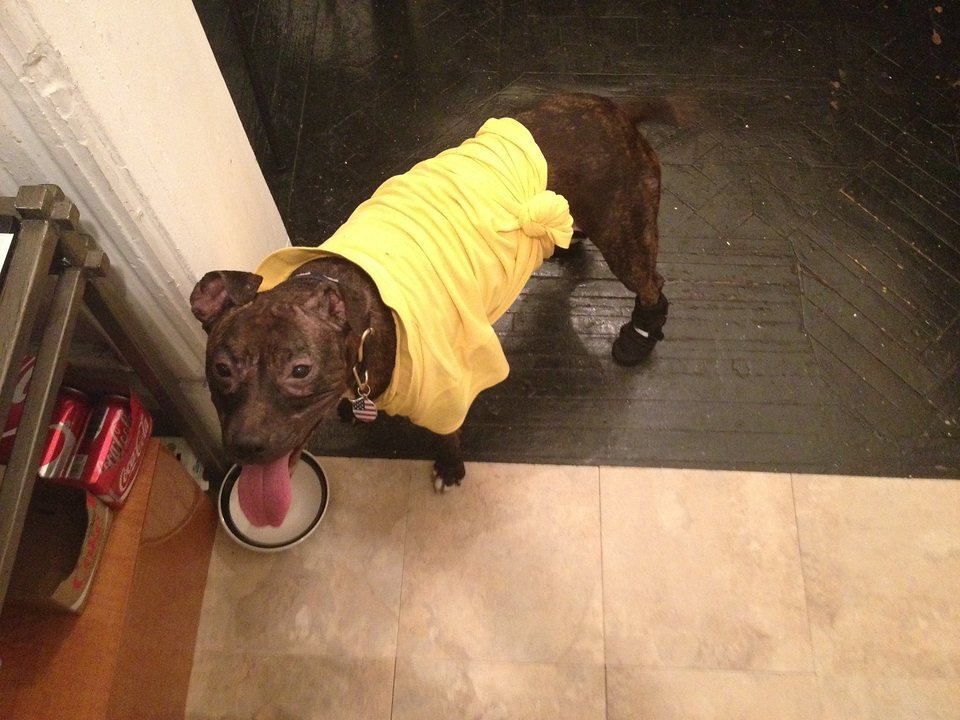
I had grown up around animals. I understood food, walks and the occasional trip to the vet. I had not understood that “she has allergies” could mean years of treatments, special routines and checking what your dog was wearing before you could go out to dinner.
Mia provided a fairly thorough education.
She also made it very easy to fall in love with her. There was so much expression in her face: the eyes, the enormous smile, the sense that she was taking everything in. When I developed dry socket after having my wisdom teeth removed, I spent more than a week feeling absolutely miserable doing anything I could to get by and not think of the pain. She snuggled up against me and provided endless comfort throughout. For all the time we spent trying to make her feel better, she was remarkably good at returning the favor.
Near a swimming pool, however, she had a different job for us. If there was a tennis ball, we were throwing it. Repeatedly. My preferred afternoon involved a pool float and very little effort; hers required a human with a functioning throwing arm. You can probably guess whose plans prevailed.
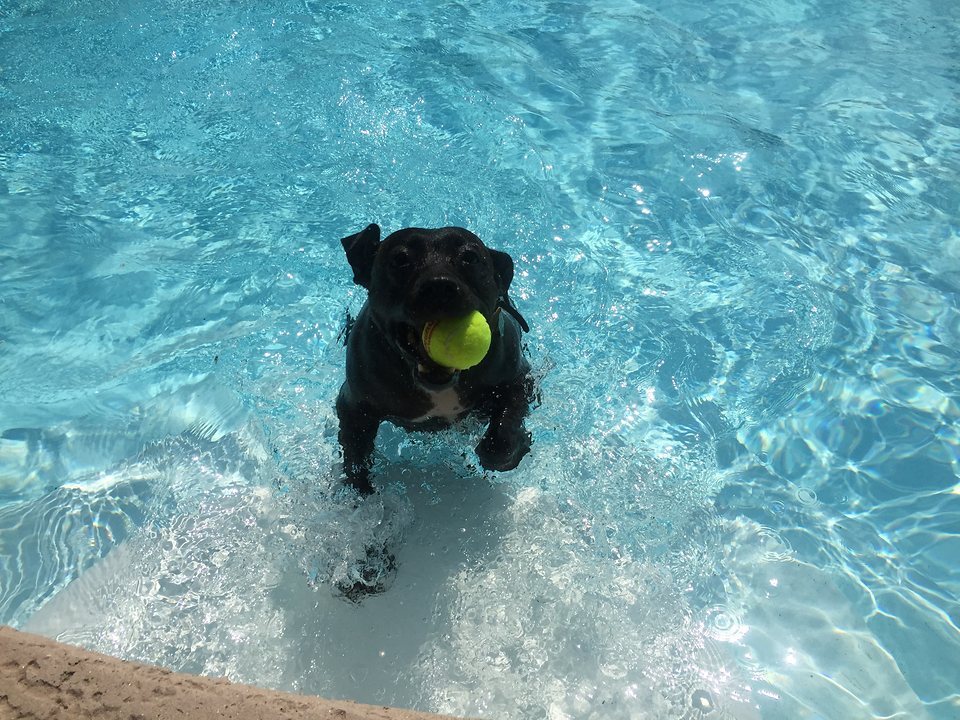
That is the dog behind PetHSA. Before she was part of a founding story, she was part of our family: affectionate, persistent, funny and, as I soon discovered, extraordinarily expensive.
Brad had spent years trying to get her skin allergies under control. Appointments, treatments, food changes, medications and care at home had become ordinary parts of his life long before they became part of mine. Some things seemed to help. The work still needed doing the next day, and the day after that.
But love doesn’t make the bills disappear.
Brad estimates that Mia’s lifetime care cost more than $100,000. I remember how surprising the ordinary expenses were, even before I understood the scale of that total. A particular food, another treatment, supplies we needed again: these were recurring commitments, paid alongside the rest of our lives. Someone also had to be there to do the care. When Brad worked long hours, I took on more of the routine.
We were fortunate to have the resources to make choices that many families cannot. Even so, we could be loving, involved pet parents and still feel overwhelmed by what caring for her required. Losing her left us with questions about the care, the costs and the decisions we had made. I kept thinking about what those decisions would feel like if the money simply wasn’t there.
Years later, those experiences found their way into conversations with friends and classmates in our executive MBA program at the University of Miami. We were spitballing capstone ideas, pulling them apart and putting them back together. Some of that happened over martinis and scotches at the Biltmore in Coral Gables, where we stayed during our classroom residencies. Apparently, business school could occasionally be quite enjoyable.
Around those conversations came experience in human resources, benefits, finance, digital media and more, alongside a shared love of pets. My own professional background was in media and digital experiences. I wanted to put that experience toward something I cared deeply about, and Mia had given the question of pet-care costs a very personal meaning.
The idea behind PetHSA gradually took shape: help families understand more of the commitment they are taking on, plan for expenses and find useful information before everything becomes urgent. Mia’s care had shown me how much can sit behind a seemingly simple diagnosis—and how unprepared you can feel despite having had pets all your life.
Better planning could not have promised us a different outcome with Mia. Nor does the amount a family can spend tell you how much they love their pet. What I wanted was more room to prepare, ask questions and think before fear was doing most of the thinking for us.
Mia gave that work a reason to exist. She also gave us a family life worth telling you about, most of which involved considerably less business planning and considerably more pet-friendly fun.